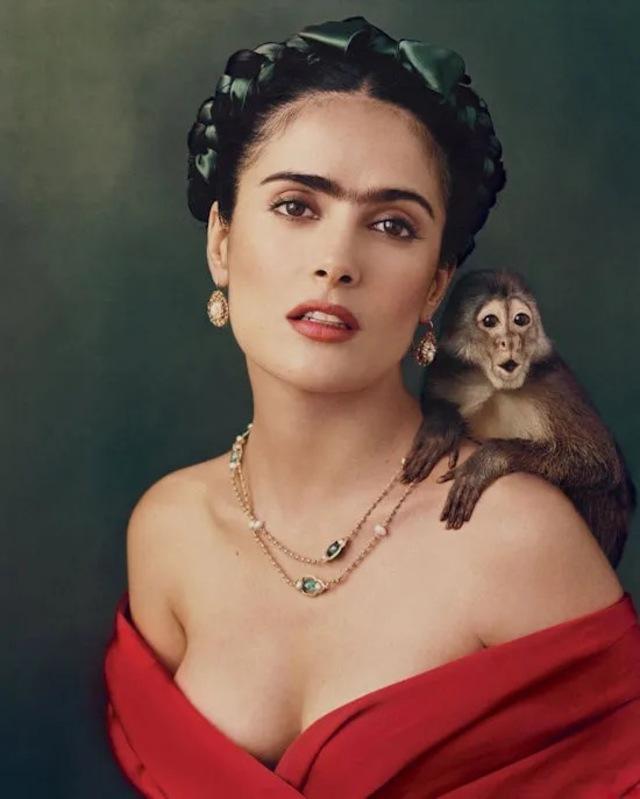
In the vast landscape of cinematic biographies, few films have managed to capture the soul of their subject as viscerally as the 2002 masterpiece, Frida. While the world has long been fascinated by the haunting self-portraits of Mexican artist Frida Kahlo, it was Salma Hayek’s transformative performance that bridged the gap between the canvas and the heart.
More than a mere retelling of a life story, Frida is a bold, sensory explosion—a symphony of pain, politics, and unapologetic individuality. It marked a seismic shift in Salma Hayek’s career, moving her from a Hollywood “head-turner” to a formidable creative powerhouse. This is the story of how a passionate actress fought against the tide to honor an icon, creating a legacy that continues to inspire artists and dreamers two decades later.
Producer’s Crusade: Hayek’s Fight for Creative Control
For Salma Hayek, Frida was never just a job; it was a crusade. In the late ’90s, the Hollywood machine was skeptical of a biopic centered on a disabled, communist, Mexican female artist. Industry insiders viewed the project as “too niche” for a global audience. However, Hayek refused to take “no” for an answer.
Stepping into the role of producer, she fought relentlessly for creative control and cultural authenticity. She didn’t just want to play Frida; she wanted to protect her. Hayek felt a profound personal connection to Kahlo—not only as a fellow Mexican woman but as a symbol of artistic integrity. In doing so, Hayek shattered the narrow expectations Hollywood held for Latina actresses at the time. She proved that diverse stories, told with enough passion and grit, could command the world’s attention.

Behind the iconic image was a woman of immense intellectual depth. To see the raw beauty of the actress who dared to embrace Kahlo’s ‘imperfections,’ view the feature below.”
Julie Taymor’s Surrealist Vision: Living Paintings
One of the reasons Frida stands apart from traditional biopics is the innovative direction of Julie Taymor. Rather than a straightforward, chronological timeline, Taymor crafted a visual language that mirrored Kahlo’s own artwork. The film frequently transitions from real-life tragedy into surreal, painterly sequences.
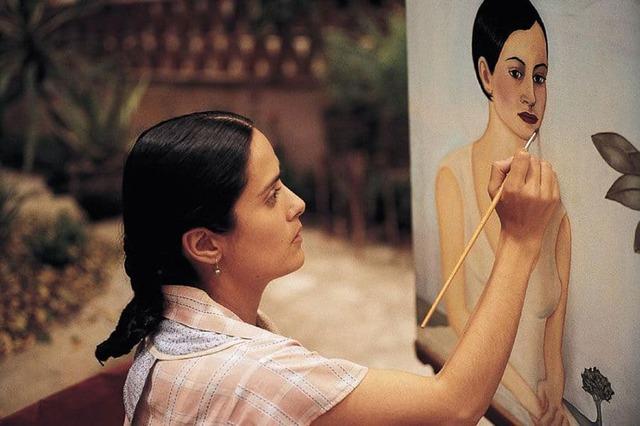
When Frida suffers the catastrophic bus accident that would define her life, the film portrays the horror through a dreamlike, almost magical lens. This choice prioritized emotional truth over clinical realism. By utilizing a rich color palette and symbolic imagery, Taymor and Hayek allowed the audience to step inside the paintings. The film became a cinematic extension of the Tehuana dresses and bold accessories that Kahlo used as armor against her physical and emotional suffering.
The Physical and Soulful Transformation

To become Frida, Hayek underwent a metamorphosis that was both external and internal. She famously adopted the artist’s signature unibrow and meticulous wardrobe, but the transformation went far deeper than makeup. Hayek spent years studying Kahlo’s personal letters, diaries, and unpublished writings to capture her wit, her vulnerability, and her fierce revolutionary spirit.
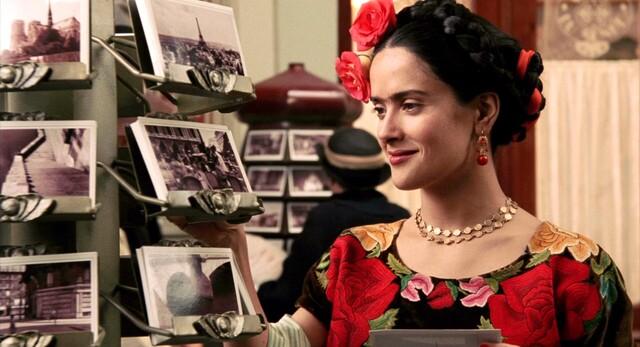
Hayek’s performance was intellectually raw. She didn’t shy away from the darker aspects of Kahlo’s life—her chronic pain, her complicated sexuality, and her defiant politics. This dedication earned Hayek an Academy Award nomination for Best Actress, a historic moment that signaled a long-overdue shift toward inclusion in the film industry.
A Collision of Giants: The Turbulent Love of Frida and Diego
At the heart of the film lies the passionate and often destructive relationship between Frida and muralist Diego Rivera, played with brilliant nuance by Alfred Molina. Their bond was a collision of two giants—artistic partners who inspired each other’s greatest works while simultaneously breaking each other’s hearts.
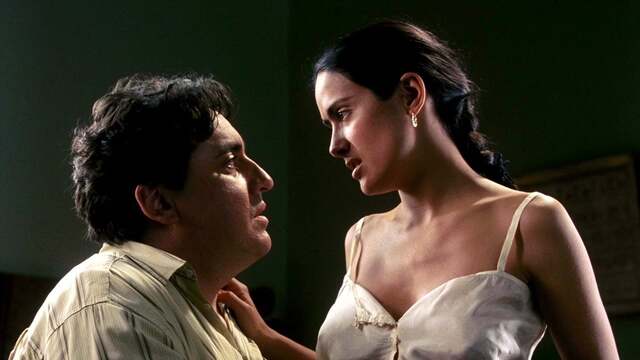
Hayek and Molina captured the “beautiful mess” of this partnership. The film avoids idealizing their marriage, instead portraying it as a revolutionary bond fueled by mutual admiration and frequent betrayal. It was a love story that mirrored Kahlo’s own internal contradictions: she was fierce yet fragile, independent yet deeply tied to the man she called the “second great accident” of her life. Their chemistry on screen made the tragedy of their connection feel profoundly human.
The Sensory Experience: A Symphony of Culture

The impact of Frida is as much about what you hear as what you see. The film’s soundtrack, composed by Elliot Goldenthal, is a masterful blend of traditional Mexican rancheras and original orchestral pieces. The score, which won an Academy Award, serves as the heartbeat of the film, amplifying the cultural richness of Coyoacán and the emotional weight of Frida’s isolation.
Experience the visual and auditory masterpiece that brought a Mexican legend to the global stage.
Beyond the music, the film sparked a global “Fridamania.” It moved Kahlo’s work from the halls of academia into the mainstream consciousness. It celebrated her trailblazing feminism and her refusal to conform to traditional beauty standards, making her a hero for a new generation of women who found strength in their own imperfections.

Two Decades Later: A Legacy Carved in Persistence
More than twenty years since its premiere, Frida remains as relevant as ever. In a world that still struggles with issues of representation and the pressure for perfection, Kahlo’s story—told through Hayek’s lens—encourages us to speak boldly and create without apology.
Salma Hayek’s journey with this film cemented her status as more than just a movie star; she became a force for diverse storytelling. She took a project that few believed in and turned it into a critical and cultural triumph. The film stands as a reminder that great art requires personal risk and that the most enduring legacies are built on authenticity.