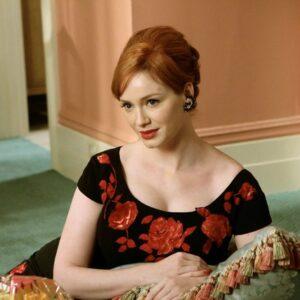
In the modern cycle of celebrity, fame is often treated as a destination—a final landing spot where the individual remains frozen in the public eye. However, every so often, a figure emerges who views the spotlight not as a cage, but as a stepping stone. Marina Baker is the embodiment of this rare evolution.
Born in the historic town of Windsor in 1967, Baker’s journey is a masterclass in infinite expansion. She has successfully navigated the worlds of high-fashion modeling, investigative journalism, authorship, and local government, serving as the Mayor of Lewes. Her life defies easy categorization, proving that a person can evolve through radically different phases without ever losing their core essence. Today, her mission is rooted in the earth—literally—as she leads community efforts in permaculture and environmental literacy.
The Lens and the Stage: Identity as an Artistic Experiment
Marina Baker first captured the public imagination in the late 1980s and early ’90s. With a visual magnetism that was impossible to ignore, she became a standout in editorial photography and small acting roles. Yet, for Baker, modeling was never about vanity; it was an experiment in identity.
She understood early on that her presence in the entertainment industry provided a platform—a way to gain a voice in a world that often silences women. During this era, her expressive depth made her a favorite for photographers seeking more than just a face. She used each appearance to explore the boundaries of her own persona, all while quietly planning a move toward something with more intellectual weight.

Before she was a public servant, Marina Baker was a master of the visual medium. Her early career showcased a woman who knew how to command attention long before she commanded a council chamber.
The Intellectual Rearming: From Visibility to Academia
At the height of her visibility, Baker made a move that confused the paparazzi but made perfect sense to those who knew her: she walked away from the camera and toward the classroom. Enrolling at the University of Sussex to study English and American Literature, she began what she calls her “intellectual rearming.”
This period marked a profound philosophical pivot. Immersing herself in media theory, feminism, and environmental literature, Baker began to critique the very systems of power she had once navigated as a performer. Her education wasn’t a retreat from the world; it was a preparation for a new kind of engagement. She emerged from her studies not just as a graduate, but as an activist armed with the tools to analyze and challenge social norms.
The Pen as a Weapon: Journalism with Intention
Armed with a degree and a sharpened worldview, Baker stepped into the world of British journalism. She didn’t settle for light lifestyle features; instead, she tackled parenting, gender roles, and environmentalism with a blend of personal insight and sharp social critique.

Her writing resonated because it was participatory. She wasn’t an outsider looking in; she was a mother, a woman, and a citizen navigating a rapidly changing cultural landscape. Her op-eds in major British publications helped readers decode the complexities of modern life, earning her a reputation as a trusted, grounded voice. She proved that the same woman who could grace a magazine cover could also dismantle a political argument with her pen.
Leading from the Neighborhood: The Mayoral Legacy in Lewes
Baker’s desire for systemic change eventually led her to the ballot box. Serving as a Liberal Democrat town councillor, she was eventually elected as the Mayor of Lewes. Her administration was a departure from traditional, top-down politics. Instead, she championed a “collaborative leadership” style.
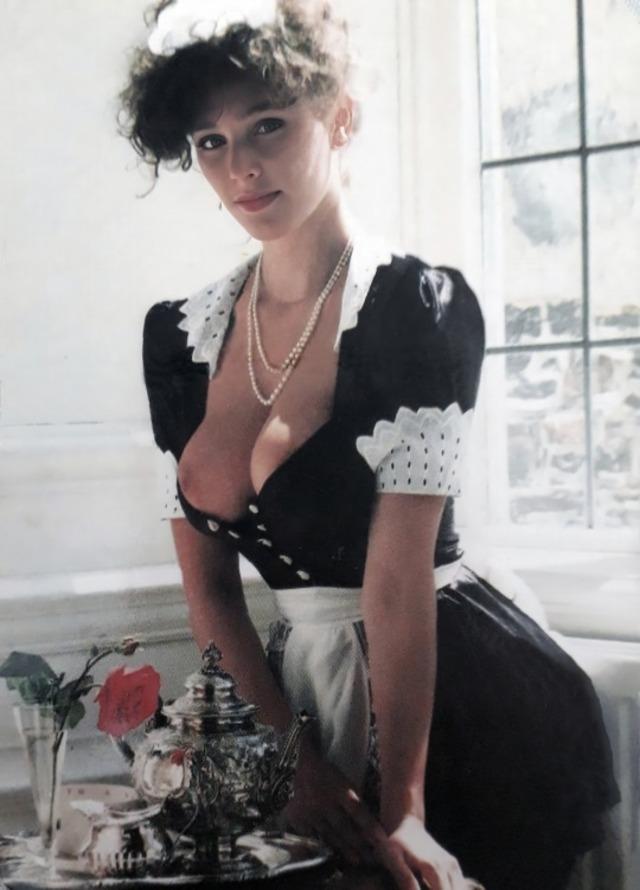
During her tenure, Baker focused on sustainability, inclusivity, and educational outreach. She became a prominent advocate for climate-conscious planning long before it became a mainstream political talking point. For Baker, the mayoralty wasn’t about the title; it was about the proximity to the people. She believed that real change doesn’t start in national institutions, but in the gardens and council chambers of local neighborhoods.
Mysticism and Empowerment: Bridging Spirituality with Activism
Parallel to her political career, Baker found success as an author. Her most famous work, Spells for Teenage Witches, became a cultural touchstone for young women seeking alternative paths to self-discovery. However, the book was more than just a collection of rituals; it was a manual for emotional intelligence.

By blending historical knowledge with practical advice, Baker empowered a new generation to find their own voices. Her writing bridged the gap between mystical tradition and practical activism, teaching young readers that “magic” is often found in the courage to be oneself and the responsibility to care for the planet. She remains a respected figure in discussions regarding new-age feminism and alternative education.
Marina’s literary works serve as a bridge between the ancient and the modern, offering a roadmap for empowerment that is as much about the spirit as it is about social responsibility.
The Present-Day Mission: Permaculture and Eco-Literacy

Today, Marina Baker has traded the bustle of politics for the quiet productivity of the earth. She is a dedicated practitioner and teacher of permaculture—a system of agricultural and social design principles centered on simulating or directly utilizing the patterns and resilient features observed in natural ecosystems.
She organizes community gardens, teaches eco-literacy workshops, and speaks at seasonal festivals. Her mission today is as bold as it was when she was a young activist: to prove that knowledge is the primary catalyst for change. By staying outside the mainstream media and focusing on grassroots efforts, she maintains an authentic connection to her community, teaching that the most revolutionary thing one can do is grow their own food and question the status quo.
Final Thoughts: Redefining Success on One’s Own Terms
The life of Marina Baker is a testament to the power of expansion. She has been a performer, an academic, a journalist, a politician, and an environmentalist. At every turn, she has redefined success on her own terms, refusing to be limited by the expectations of others or the narrow definitions of the industries she inhabited.
Her impact is felt in the libraries where her books are read, the council chambers where her policies were debated, and the community gardens where her permaculture principles are thriving. She serves as a powerful example of how intelligence and compassion, when paired with a vision for the future, can shape a legacy that truly matters. Marina Baker teaches us that influence isn’t about the spotlight—it’s about the substance you leave behind when the lights go out.